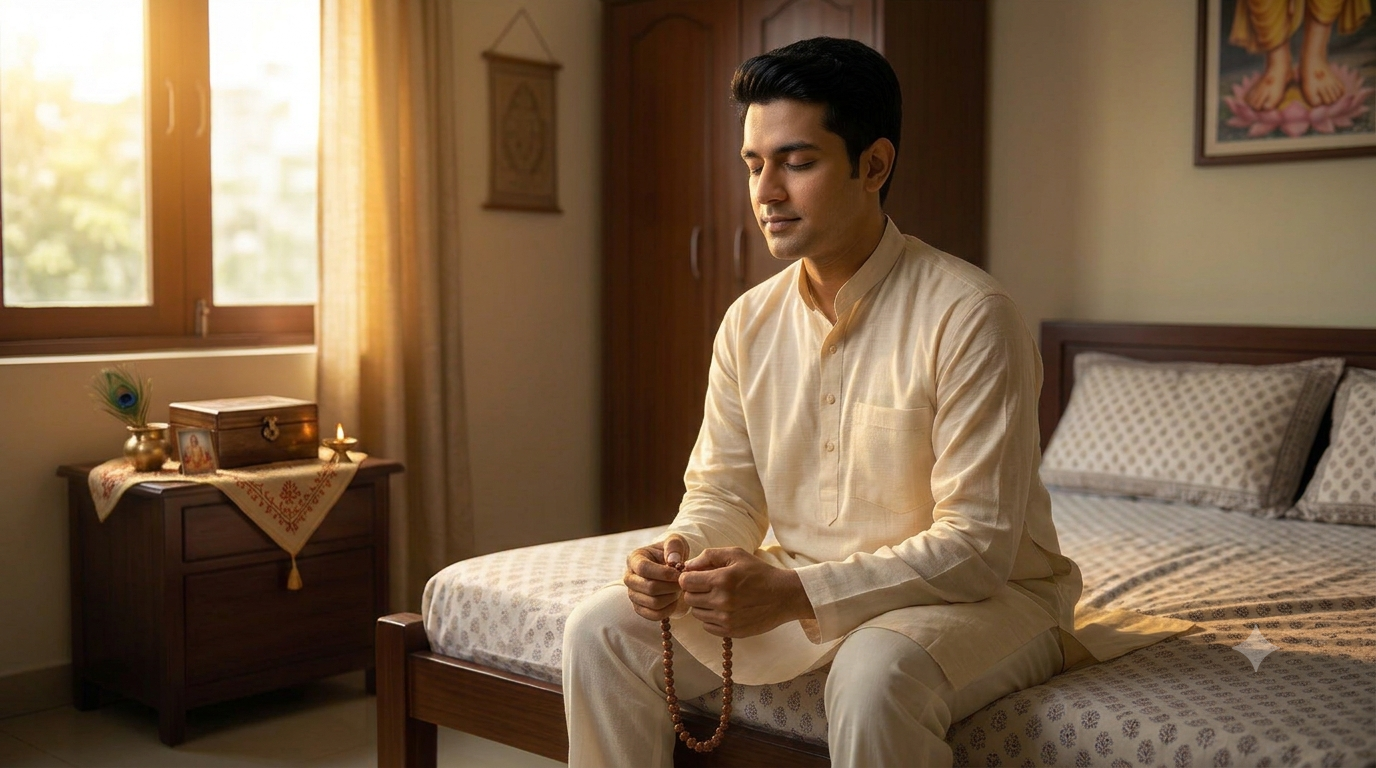
Sometimes, we become so accustomed to an illness that we fail to recognise how sick we really are. The same can happen in our spiritual lives. We may become accustomed to material conditioning and mistake it for normal life, without realising how much we need spiritual care.
Since childhood, I have had an abnormal growth in my tonsils. Because of this, I do not experience much pain in my throat, even when I suffer from a sore throat. As a result, I receive very little warning before the condition develops into something more serious.
The same thing happened again. I had been suffering from a persistent cough for quite some time when my home minister, my wife Rusha, took matters into her own hands and insisted that I visit a doctor.
The doctor asked me what was wrong. I replied that there was nothing much to worry about, just a little cough. But when he examined my throat, he was surprised. He asked whether I had pain in my throat or difficulty swallowing food. I confidently replied that I felt perfectly fine.
He advised me to get two X-ray examinations done, one of the paranasal sinuses and the other of the lungs. The findings revealed that I was suffering from an acute respiratory tract infection and sinus problems. I had not realised how unwell I was.
After following the prescribed treatment, including medication, gargling and avoiding cold items as advised, I recovered. What struck me most was that I had become so accustomed to my condition that I had failed to recognise the seriousness of the problem.
As I lay on my bed contemplating the experience, I realised how easily we can mistake an abnormal condition for a normal one. Because my symptoms were mild, I assumed that everything was fine. I had relied on my own judgement, but it was only after consulting a qualified doctor and following the prescribed treatment that I began to recover.
This experience reminded me of a much deeper problem: the disease of the soul, which Srila Prabhupada describes as the material disease.
In the purport to Srimad-Bhagavatam 5.14.5, Srila Prabhupada explains that when a living entity forgets the lotus feet of Lord Nityananda and becomes absorbed in material possessions, wealth and opulence, he begins to regard the temporary material world as permanent and real. This mistaken understanding is described as the material disease.
ahaṅkāre matta hañā, nitāi-pada pāsariyā,
asatyere satya kari māni
Becoming maddened by false ego, forgetting the lotus feet of Lord Nityananda, one accepts that which is temporary and unreal as truth.
Srimad-Bhagavatam 5.14.5, purport
The living entity is an eternal spiritual soul. Yet, under material conditioning, we become absorbed in temporary identities, possessions and ambitions. We experience the miseries of material existence but continue to believe that material arrangements alone will bring lasting happiness.
Just as I had become accustomed to my physical condition, we too can become accustomed to the symptoms of material conditioning. We may experience anxiety, dissatisfaction, repeated frustration and the fear of losing what we possess, yet continue to consider our way of life perfectly normal.
The question is not merely whether we experience these symptoms. The more important question is whether we recognise their underlying cause and seek the right treatment.
The Four Elements of Spiritual Treatment
In ordinary life, when we feel unwell, we seek medical attention. If we ignore the symptoms or casually assume that they will disappear on their own, the condition may worsen. We may even try to treat ourselves, but our assumptions cannot replace the knowledge and experience of a qualified doctor.
Why should spiritual life be any different? If we want to overcome the material conditioning of the soul, we need proper guidance and must be willing to follow the prescribed process.
My experience brought four elements of treatment to mind:
DOCTOR
MEDICINE
RESTRICTIONS
EXERCISE
Let us understand how these four elements relate to our spiritual lives.
1. Doctor: Accepting Qualified Spiritual Guidance
When a person suffers from a bodily illness, an intelligent response is to consult a qualified doctor. Rather than relying entirely on personal assumptions, the person seeks someone with the knowledge and experience needed to identify the problem and recommend appropriate treatment.
Similarly, an intelligent person reflects on the deeper problems of life. Why do we experience repeated suffering? Why does material happiness remain temporary? Why do our attempts to control circumstances never provide lasting security?
Such questions can lead us to recognise that our difficulties are not limited to the body and mind. We also need to understand our spiritual identity and our relationship with the Supreme Lord.
For this purpose, we seek the guidance of a bona fide spiritual master, who teaches us the path of spiritual life through the authority of scripture and the disciplic succession.
Srimad-Bhagavatam 6.1.2, in Srila Prabhupada's purport, describes the conditioned living entity's movement through material existence and the intelligent person's turn towards the path of liberation.
brahmāṇḍa bhramite kona bhāgyavān jīva
guru-kṛṣṇa-prasāde pāya bhakti-latā-bīja
While wandering throughout the universe, a fortunate living entity receives the seed of devotional service by the mercy of guru and Krishna.
Sri Caitanya-caritamrita, Madhya-lila 19.151
A spiritual master does not merely provide information. He guides us in understanding our spiritual identity and practising devotional service. Our responsibility is to hear submissively, understand the instructions and sincerely apply them in our lives.
2. Medicine: Chanting the Hare Krishna Maha-mantra
A doctor may identify the illness correctly, but recovery also requires following the prescribed treatment. Similarly, accepting a spiritual master is not the end of our spiritual journey. We must practise the process he teaches.
In the age of Kali, Lord Caitanya Mahaprabhu taught the chanting of the Hare Krishna maha-mantra as the essential process of spiritual advancement.
Hare Krishna Hare Krishna, Krishna Krishna Hare Hare
Hare Rama Hare Rama, Rama Rama Hare Hare
The Hare Krishna Maha-mantra
Srila Prabhupada explains in Teachings of Lord Caitanya that Lord Caitanya's spiritual master instructed Him to chant the Hare Krishna mantra. The Lord presented this chanting as the essential process for spiritual advancement in the present age.
harer nāma harer nāma
harer nāmaiva kevalam
kalau nāsty eva nāsty eva
nāsty eva gatir anyathā
In this age of quarrel and hypocrisy, the only means of deliverance is chanting the holy name of the Lord. There is no other way, no other way, no other way.
Brhan-naradiya Purana 38.126; quoted in Sri Caitanya-caritamrita, Adi-lila 17.21
The holy name is not simply a ritual to be completed. We are meant to chant with attention, sincerity and a desire to serve Krishna. By hearing the holy name and following the instructions of the spiritual master, we gradually cultivate our relationship with the Lord.
Just as taking medicine requires regularity, spiritual practice requires consistency. We cannot expect deep transformation if we approach chanting casually and only when convenient.
3. Restrictions: Following the Regulative Principles
Treatment often involves changing habits that contribute to a health problem. A doctor may recommend dietary adjustments, rest or other restrictions as part of a treatment plan. Following these instructions requires discipline, even when they are not immediately convenient.
Similarly, spiritual advancement requires us to regulate our conduct. In the practice of Krishna consciousness, devotees follow four regulative principles:
- No eating meat, fish or eggs.
- No intoxication.
- No gambling.
- No illicit sex.
These principles are not meant to be arbitrary restrictions. They help us regulate our senses and cultivate a life centred on devotional service rather than uncontrolled material desires.
Consider the contradiction of taking medicine for a cough while repeatedly doing things that aggravate the condition. Similarly, we cannot expect steady spiritual progress if we chant the holy name while deliberately maintaining habits that oppose the principles we have accepted.
Spiritual life therefore involves both positive engagement and restraint. We cultivate devotion through chanting, hearing, service and remembrance, while also learning to give up activities that obstruct our progress.
4. Exercise: Maintaining the Right Association
My doctor advised me to gargle every night before going to sleep. Even after recovering from the infection, I was advised not to abandon the practice casually. The aim was to maintain a healthy routine rather than wait for the problem to return.
Similarly, spiritual health requires sustained practice and favourable association. We should not wait until we feel spiritually weak before returning to devotional activities. Daily habits help us remain steady.
Association is broader than simply being physically present with other people. It also includes what we read, hear, speak about and allow our minds to dwell upon.
- People around us: Seek the association of devotees who encourage sincere spiritual practice.
- What we read: Study Bhagavad-gita, Srimad-Bhagavatam and other authorised devotional literature.
- What we speak: Speak about Krishna, glorify the Lord and His devotees, and use our words constructively.
- What we hear: Hear the holy name, scriptural classes and discussions about Krishna.
- What we think: Make a conscious effort to remember Krishna and apply His teachings in everyday life.
This does not mean that we must withdraw from every ordinary responsibility or conversation. Rather, we learn to organise our lives so that our association and daily activities support our spiritual goals.
Regular chanting, scriptural study, service and the company of devotees help us remain conscious of our spiritual purpose. These practices are not merely emergency measures for difficult times. They are part of a steady life of devotional service.
Recognising the Disease Is the Beginning
My throat infection taught me a simple lesson: the absence of severe symptoms does not necessarily mean that everything is well. I had become accustomed to my condition and underestimated the problem. It was only when I consulted a qualified doctor and followed the prescribed treatment that I could address it properly.
We can make a similar mistake in spiritual life. Because material habits feel familiar, we may not recognise how deeply they influence our thoughts, choices and priorities. We may be busy, comfortable or successful in worldly terms while remaining inattentive to our eternal relationship with Krishna.
Srila Prabhupada repeatedly directed our attention towards this fundamental problem of material existence and the process of becoming free from it. Srimad-Bhagavatam 6.1.2 explains that an intelligent person turns away from the path of material enjoyment and towards the path of liberation.
Recognising our condition is therefore an important beginning, but recognition alone is not enough. We must accept qualified guidance, practise the prescribed process, regulate our conduct and maintain favourable association.
Let us not wait until the symptoms become unbearable before taking our spiritual lives seriously. By the mercy of guru and Krishna, may we recognise our real need and sincerely follow the path of devotional service.
We may become accustomed to the symptoms of material life, but we should never become complacent about the condition of the soul.


